
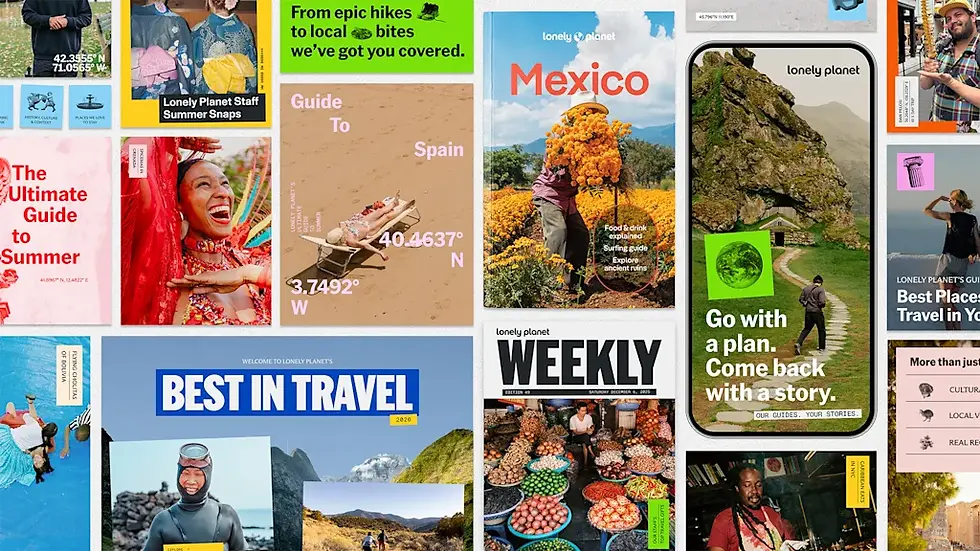
Reinventing the world's most iconic travel publication for the digital age

Updated: May 8
ROLE
Lead Product Designer
DURATION
6 months
SERVICES
User Flows, Task Flows, Content Strategy, Workshops, UX, Wireframes, Mockups, Prototypes, Visual Design, User Interface
CHALLENGE
Lonely Planet's beloved print content was stranded in a format that couldn't follow travelers into the field, leaving a massive gap between inspiration and in-destination action.
STRATEGY
I led the design strategy and core app experience for a comprehensive travel companion, pivoting from rapid prototyping to a deeper investigation of Lonely Planet's unique content IP and the mechanism that makes it irreplaceable.
IMPACT
Delivered a complete experience framework, established the design system foundation for Lonely Planet's full digital ecosystem, and defined the MVP path for a product built to bridge inspiration and in-destination decision-making.
CHALLENGE
A brand built on discovery, stuck in print
Lonely Planet's authority in travel comes from its content: painstakingly curated, editorially driven, trusted by adventurers for decades. But that content lived in print and static formats, unable to follow travelers into the field. Meanwhile, the expectations of today's traveler had shifted fundamentally. They wanted guidance that was contextual, media-rich, and accessible in their pocket at all times.

The stakes were high. With a catalog of over 40,000 guidebooks and a global audience of avid travelers, the wrong digital strategy could erode one of travel's most recognizable brands. The right one could define the next chapter.
STRATEGY
Start with what makes Lonely Planet, Lonely Planet
The engagement opened with a 3-day executive workshop at Red Ventures' Park Avenue office in New York. I facilitated alignment sessions with senior stakeholders across product, content, and business to define the target audience, scope, and success criteria. One signal came through clearly: there was a hunger for near-term results, which meant the strategy had to be both visionary and executable.

Early assumptions pointed toward rapid prototyping as the fastest path to validation. But through daily working sessions with Lonely Planet's product team, I identified a more fundamental need. Before we could design screens, we needed to understand the core mechanism: the thing that made Lonely Planet's content uniquely valuable and irreplaceable.
Mapping the joy of collecting content
I dug deep into Lonely Planet's guidebook content and built mental models of a new data structure capable of translating print into a native app environment. The result was what I called a "lighthouse view," a North Star rendering of how curated editorial content could come alive in a media-rich, interactive format that preserved the serendipity and authority of the print experience.

This wasn't a wireframe exercise. It was a strategic reframe: shifting the product conversation from "how do we digitize our books" to "how do we design for the joy of discovery." That distinction shaped every design decision that followed.

Designing the core app experience
Leading a small, focused team of product stakeholders and designers, I moved quickly through the core app experience, running structured review sessions across wireframes, mockups, and interactive prototypes. These ceremonies weren't just reviews; they became the catalyst for product strategy and requirements definition, giving stakeholders a shared language and a concrete artifact to rally around.

I advocated early for collaboration with Lonely Planet's content team and developed asynchronous UX research workshops to validate emerging design patterns against real user behavior. Key insights from those sessions were integrated directly into the product rather than siloed in a report.


Building for scale and continuity
As development milestones approached, I accelerated output through a dedicated Figma component library, establishing the experience strategy for secondary workflows, including profile, onboarding, and search. This wasn't just a handoff artifact. It served as the foundation for a revamped design system intended to span Lonely Planet's full digital ecosystem: app, website, and beyond.
I set an aspirational view of the ideal product state while maintaining a clear, realistic path to MVP, ensuring the team had both a destination and a workable route to get there.

RESULTS
North Star Vision
Complete native app experience framework covering core discovery, content collection, and secondary workflows, validated with users and ready for development handoff.

Component Library
A Figma component library and design language established as the foundation for a revamped system across Lonely Planet's full digital ecosystem.

Testimonial
“You were key in helping us understand the most important and complex user mechanism.”

